

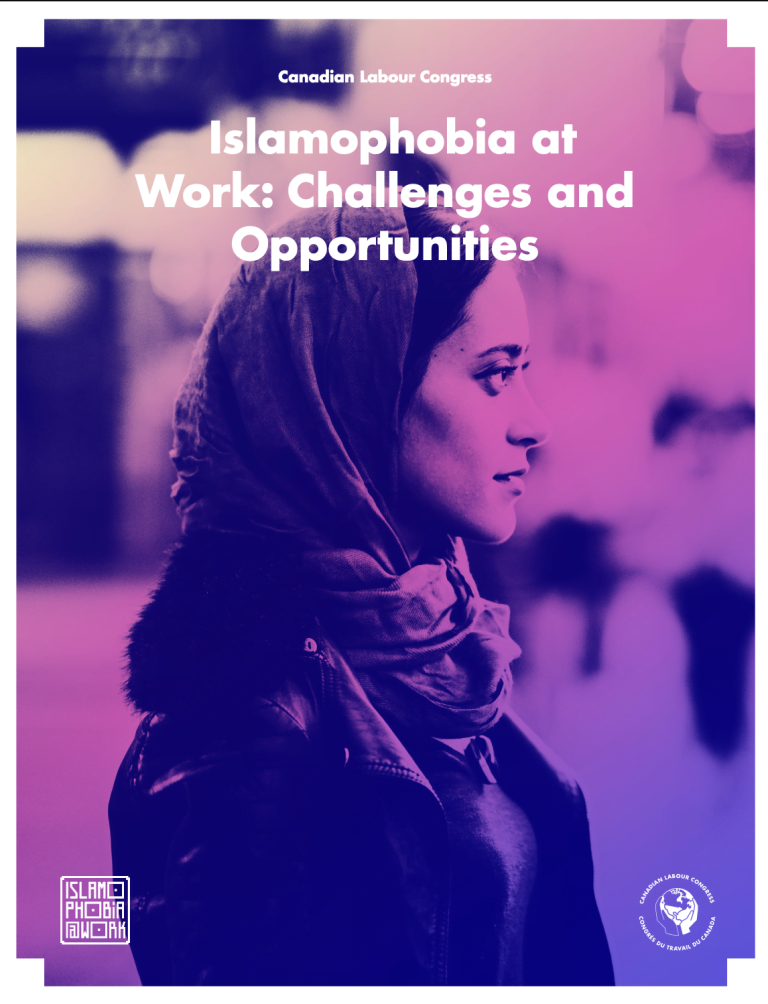
“Islamophobia at Work: Challenges and Opportunities,” published by the Canadian Labour Congress, argues that Canada’s unions and working people should view the development of Islamophobia as deeply alarming, threatening and urgently in need of a response. Canada’s unions have a responsibility to understand, confront and interrupt racism and discrimination in workplaces, organizations and communities.
23 search results
for
Racialized people
Recommendations to government
Recommendation 27: Provide more funding to support anti-racism and anti-oppression programs, especially programs to combat Islamophobia.-
Category and theme:
Audience:
Groups affected:
Location of recommendation:
Recommendations to government
Recommendation 28: Act on the 30 recommendations submitted by the Standing Committee on Canadian Heritage in the report, entitled Taking Action Against Systemic Racism and Religious Discrimination Including Islamophobia.-
Category and theme:
Audience:
Groups affected:
Location of recommendation:
Recommendations to employers
Recommendation 29: Ensure employers, management and employees understand their obligations under the Canadian Human Rights Act to Muslim employees in the workplace and to create a fair and healthy workplace free from discrimination, harassment, prejudice and bias. Provide resources to ensure that racialized and/or Muslim employees know their rights in the workplace.-
Category and theme:
Audience:
Groups affected:
Location of recommendation:
Recommendations to employers
Recommendation 30: Develop organizational and workplace policies and practices that are fair, equitable and free from discrimination, harassment or retaliation against anyone, including racialized and/or Muslim employees who work for the organization or those who receive services from it.-
Category and theme:
Audience:
Groups affected:
Location of recommendation:
Recommendations to employers
Recommendation 31: Create and ensure a positive and constructive organizational and workplace culture that is safe and respectful of multiple diversities of their employees, including Muslim employees.-
Category and theme:
Audience:
Groups affected:
Location of recommendation:
Recommendations to employers
Recommendation 32: Review organizational and business policies, practices and services as well as organizational by-laws to remove any existing or potential barriers to a discrimination, harassment and bullying-free workplace for diverse employees including Muslim employees.-
Category and theme:
Audience:
Groups affected:
Location of recommendation:
Recommendation 33:
Make anti-Islamophobia and anti-racism education or training available to leadership, managers and employees
-
Category and theme:
Audience:
Groups affected:
Location of recommendation:
Recommendations to employers
Recommendation 34: Implement name-blind recruiting and hiring practices at both the staff and management levels, and ensure there is no bias, prejudice or discrimination against employees from diverse backgrounds, including Muslim employees, in the entire employment process including onboarding, retention, and promotion.-
Category and theme:
Audience:
Groups affected:
Location of recommendation:
Recommendations to employers
Recommendation 35: Ensure there is no bias, prejudice or discrimination against employees from diverse backgrounds, including Muslim employees, in wages and compensation.-
Category and theme:
Audience:
Groups affected:
Location of recommendation:
Recommendations to employers
Recommendation 36: Create joint workplace committees with leadership, management and employees through bargaining agents or Muslim and/or racialized employee representatives to develop, monitor, and evaluate anti-Muslim and anti-racism initiatives.-
Category and theme:
Audience:
Groups affected:
Location of recommendation: